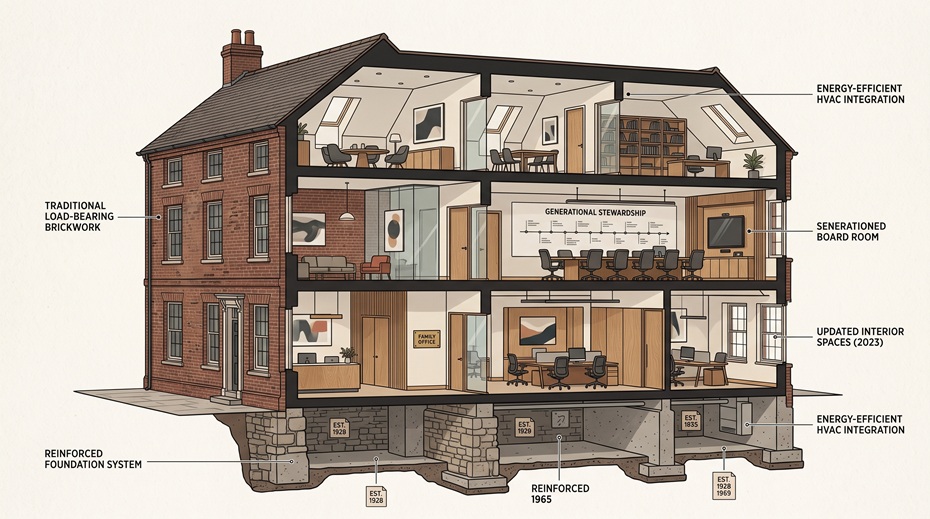
The family office mindset, as I use the phrase, begins with responsibility for ownership over time. I want to build something that can remain useful beyond one transaction and beyond my own time running it.
Alpha Asset Holdings, LLC is my personal holding company and the foundation of my family office. It holds my ownership stake in Alpha Capital Management, LLC. That arrangement gives a concrete home to a question I care about: what am I building that another generation could understand, judge, and choose to carry forward?
Ownership Gives Me a Different Starting Question
I launched my first investment fund in 2018, after working in consulting, operations, and private equity. Today I lead Alpha Capital Management, an asset management firm that invests as a co-GP alongside institutional investors. Alpha Asset Holdings holds my stake in that business.
I don’t use the phrase family office to suggest that a holding company solves every question about ownership. Nor do I use it as a claim about the scale of my wealth. I am describing the foundation from which I think about continuity.
An exit is a transaction. It can have a legitimate place in a business’s life. But I don’t want a possible transaction to supply the entire definition of what the business is for. Before considering what someone might pay for an institution, I want to understand why it deserves to keep operating.
That changes the starting question. I am interested in what needs to remain true for a business to be useful to its partners and to the people doing its work. A future owner should be able to examine that answer without depending on my enthusiasm for it.
A Longer Horizon Still Needs Near-Term Evidence
Thinking in generations doesn’t give me permission to postpone judgment. A business can describe itself as patient and still avoid the ordinary work of evaluating its decisions.
One chapter of my career involved operations at a fitness chain, with a focus on improving same-store sales performance. What matters here is the kind of attention the role required: looking at the business already operating, rather than treating expansion as the whole story. It is a useful discipline because the ambition to build something larger can distract from the work directly in front of an operator.
I see a useful parallel in ownership. A long horizon needs a way to examine what is happening now. Otherwise, patience can become a word that protects decisions from scrutiny. I want the reason for holding something to remain open to examination.
The questions I find useful are plain. Is the business doing the work it says it does? Are responsibilities understood? Can another person explain the basis for an important decision? None of those questions requires me to predict what the world will look like decades from now.
The point of a long horizon is to accept a longer responsibility, not to ask for a longer exemption from evidence.
Continuity Should Survive the Founder’s Explanation
The founder can become the place where an institution stores too much of its knowledge. If the reason for a decision exists only in one person’s memory, the institution has a problem waiting for a change in that person’s availability.
I think about continuity as a test of transferability. Could someone understand why a commitment was made? Could they tell which parts of a decision were principles and which were assumptions? Would they have enough information to disagree intelligently?
Those questions are about the standard I want to build toward, not a claim that every succession problem in my businesses is already solved. A family office mindset should make unfinished work more visible. It shouldn’t be a label that implies the work has been completed.
I also distinguish ownership from an entitlement to manage. A future owner and a future operator may have different responsibilities. Thinking across generations means leaving room for competence to matter, including competence that comes from outside the family.
To me, stewardship requires making the institution understandable without requiring the founder to remain the interpreter of every important fact. Passing on an asset without passing on the ability to judge it would leave a large part of the work undone.
The Future Needs Room to Make Its Own Decisions
There is a tension in building for future generations. I want continuity, but I don’t want to confuse continuity with the indefinite preservation of my preferences.
The people who come later will face conditions I cannot know. They should be able to distinguish a lasting purpose from a method that made sense at one particular time. A business designed to repeat every founder decision forever would struggle to make that distinction.
My history with Tree Musketeers is part of why I take institutional lifetimes seriously. I served as president from 1987 to 1994, volunteered afterward, and helped oversee its formal wind-down in 2017. The organization operated for three decades. Its ending belongs alongside its years of service.
That experience stops me from treating permanence as the only respectable outcome. Selling, restructuring, or closing can be matters for responsible judgment. I don’t think a generational horizon requires every institution or investment to remain in the same form forever.
What I want to preserve is the quality of responsibility. The person making a future decision should have a clear account of what they inherited and enough freedom to evaluate it. My attachment to the past should not become their substitute for judgment.
Build Something Worth Inheriting
Alpha Asset Holdings gives my ownership in Alpha Capital Management a place in a longer project. The purpose of that project is not fulfilled by having a holding company or using the language of generations. I have to keep asking whether the business is understandable, whether responsibility can pass beyond me, and whether future owners will inherit the ability to choose. That is the family office mindset I want to live up to: ownership that remains answerable to the people who come after it.
This article is provided for informational and educational purposes only. Nothing here constitutes an offer to sell, or a solicitation of an offer to buy, any security or investment product, nor does it constitute investment, legal, or tax advice.
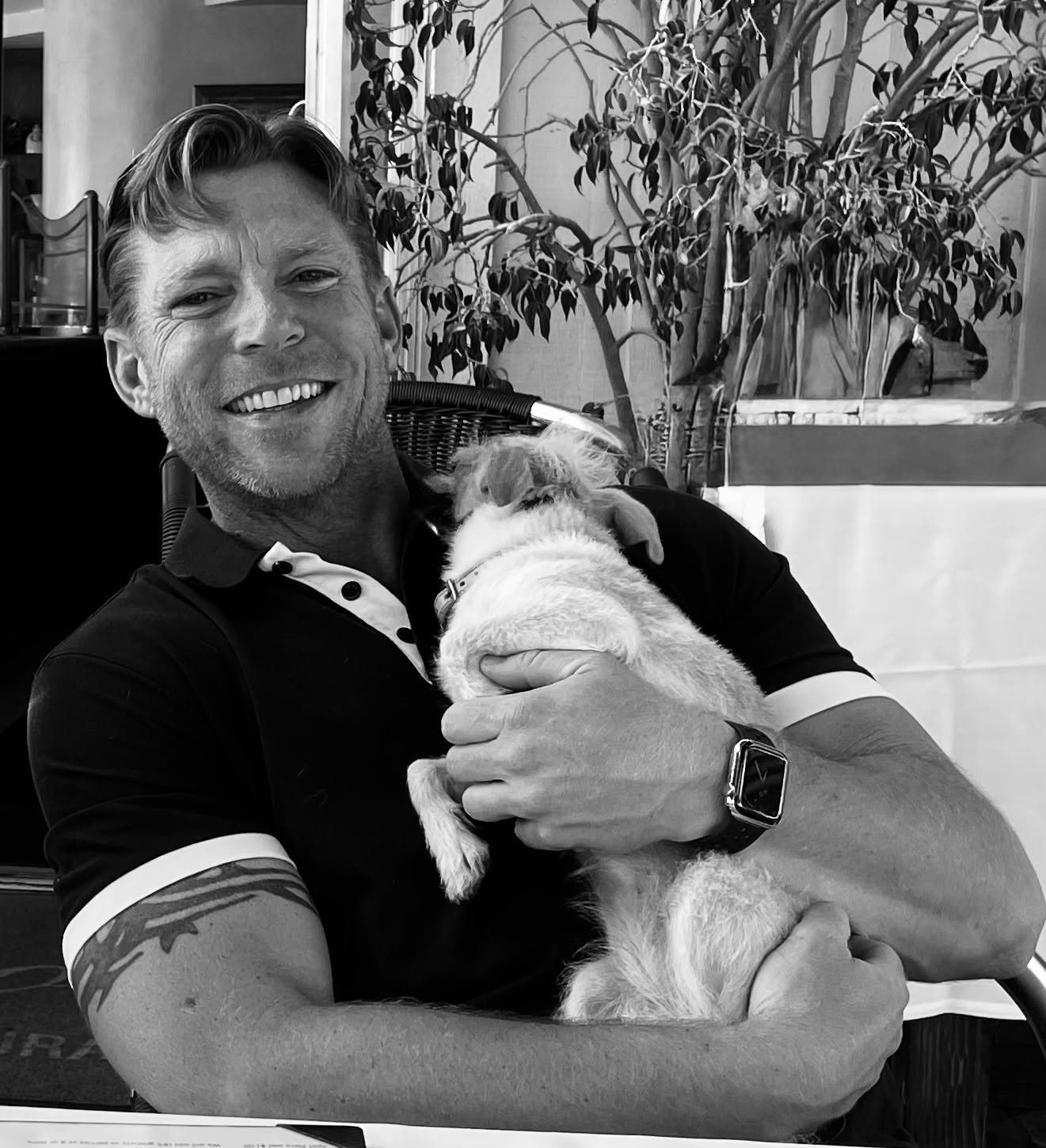
Brook Church-Koegel is the founder and CEO of Alpha Capital Management, an asset management firm that invests as a co-GP alongside institutional investors, and the founder of Advisors Edge and the Insurance Education Institute. He lives in Southern California. Read Brook’s biography.