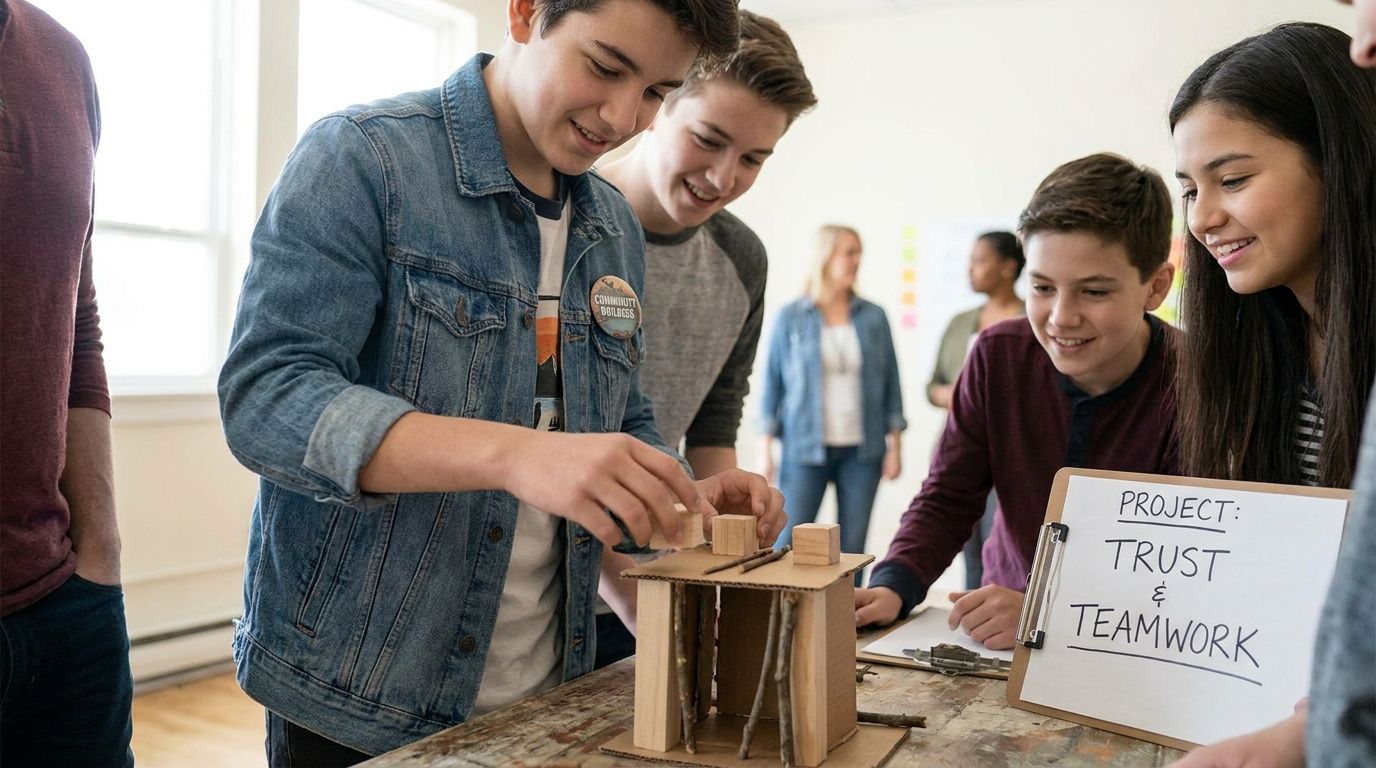
Running a nonprofit as a kid can teach you how companies are built: earn trust, find resources, organize people, measure results, and keep going after a plan breaks. The best kid nonprofit lessons are practical because you learn them before titles, funding, or authority can do the work for you.
If you’ve ever wondered whether a childhood community project can shape a founder, the answer is yes. Youth entrepreneurship research shows strong interest among teens, yet many never get formal business education, so early service work often becomes the training ground. A kid-run nonprofit doesn’t need to look polished to teach real operating skills; it only needs a mission, constraints, people, and accountability.
The Day Paperwork Teaches You The Business Of Permission
Before a young founder can help anyone at scale, they run into permission. Forms need signatures, adults need convincing, school leaders need details, and local organizations need proof that the project is serious. That part can feel slow, but it teaches a founder one of the least glamorous company-building skills: operating inside rules without losing momentum. You learn that a good idea means little until other people trust you enough to let it move.
That lesson carries straight into building companies. Customers, vendors, partners, banks, and hiring platforms all ask some version of the same question: “Can this person be trusted with responsibility?” A childhood nonprofit founder learns to answer with clarity instead of charm. You describe the goal, explain the plan, name the risks, and show how you’ll follow through.
The business of permission also teaches humility. You don’t own every room just because you started the project. You learn to ask well, listen carefully, and adapt your plan when an adult, institution, or partner points out a gap. That is founder training without the pitch deck.
How Small Fundraising Teaches Real Revenue Thinking
A bake sale, car wash, donation jar, or school fundraiser looks simple from the outside. Underneath, it forces you to answer business questions that many adult founders avoid for too long. Who cares enough to give? What message gets attention? What does it cost to raise one dollar, and what happens if turnout is lower than expected?
Fundraising teaches you that enthusiasm is not a revenue model. You can care deeply about the mission and still run out of supplies, volunteers, time, or donor patience. That tension teaches pricing, budgeting, messaging, and follow-up in plain language. You discover that money follows trust, relevance, and timing.
You also learn to test assumptions early. If people ignore the flyer, the flyer failed. If donors give once but never again, the relationship needs work. If a small event raises more than a complicated campaign, simplicity may be the better operator. Those lessons later help you compare product ideas, marketing channels, and customer acquisition without pretending every plan deserves equal weight.
Why Volunteers Teach You People Management Before Power
Managing volunteers is one of the cleanest tests of leadership because nobody has to stay. You can’t rely on a paycheck, job title, or formal reporting line. If the work feels unclear, disorganized, or thankless, people disappear. That teaches you fast that leadership is service with structure.
A kid nonprofit founder learns to give people jobs they can understand. You assign roles, set times, explain why the work matters, and notice when someone is overwhelmed. You also learn the cost of vague instructions. “Help out” sounds friendly, but “bring two boxes, greet donors, and track names at the table” gets work done.
This maps directly to hiring and team building. Company leaders don’t retain strong people through mission statements alone. They retain people by setting clear expectations, removing friction, giving useful feedback, and respecting time. Volunteers teach that long before payroll teaches it.
The Budget Constraint That Builds Better Operators
A youth-run nonprofit usually starts with almost no money. That constraint can be frustrating, but it forces careful decisions. You reuse materials, ask for donated space, borrow equipment, compare costs, and cut ideas that sound good but don’t move the mission forward. Scarcity becomes a teacher.
That kind of discipline helps later when building a company. Founders with limited capital need to choose what matters now and what can wait. They learn to separate appearance from progress. A polished logo may feel satisfying, but a working sign-up sheet, a clear message, and a reliable follow-up process may matter more.
Research on youth entrepreneurship backs up the value of early operating practice. Surveys from entrepreneurship organizations have found that many teens want to start businesses, yet far fewer have access to entrepreneurship programs in school. A nonprofit project can fill part of that gap by turning budgeting, outreach, and execution into lived practice.
What Failure Teaches Before The Stakes Get Bigger
Every early project breaks somewhere. A donor cancels, the turnout is low, a partner misunderstands the plan, or the team runs out of energy. For a young founder, that hurts. It also creates a rare learning space where the stakes are real enough to matter and small enough to survive.
Failure in a kid-run nonprofit teaches you to review the system instead of attacking your identity. You ask what was unclear, what was underfunded, what was late, and what should change before the next attempt. That habit becomes one of the strongest founder skills. Good operators don’t romanticize failure; they extract the lesson and adjust the plan.
It also teaches emotional durability. Building anything new includes rejection, confusion, and awkward conversations. If you learn early that a failed event doesn’t make you a failed person, you carry a steadier nervous system into later ventures. That steadiness helps when customers say no, launches stall, or a strategy needs to be rebuilt.
From Charity To Company: The Mindset That Crosses Sectors
The line between nonprofit work and company building is thinner than many people think. A nonprofit serves beneficiaries, earns trust from donors, manages resources, and reports outcomes. A company serves customers, earns trust from buyers, manages resources, and measures results. The legal structure changes, but the operating muscles overlap.
A mission-driven mindset helps because it keeps decisions tied to a real human need. In a nonprofit, you learn to ask who benefits and whether the work actually helps them. In a company, that becomes customer discovery, product feedback, and retention. The best founders don’t just ask whether people like the idea; they ask whether the idea solves a real problem well enough to earn repeated support.
This is where kid nonprofit lessons become business lessons. Fundraising becomes sales practice. Volunteer coordination becomes team management. Community outreach becomes marketing. Outcome tracking becomes product measurement, and resource limits become operating discipline.
How Kid Nonprofit Lessons Shape Better Founders Later
Early nonprofit work builds founder habits before the founder has the language for them. You learn to pitch a mission, organize people, build partnerships, and keep records. You also learn that credibility is earned through follow-through, not age. That matters for anyone who later builds a product, service, agency, or social enterprise.
Research from organizations focused on youth entrepreneurship and philanthropy points in the same direction. Young people who volunteer and lead community projects often report stronger leadership skills, greater interest in founding organizations, and practical experience with fundraising, budgeting, and team management. Those are not soft extras. They are the operating basics of company creation.
The transfer is not automatic. A childhood nonprofit founder still has to learn markets, pricing, product quality, legal obligations, and financial controls. Early service work gives you a head start, not a guarantee. It teaches you how to care about an outcome and build the machine that can produce it.
If You Didn’t Start Young, You Can Still Learn The Same Skills
Age can create a good origin story, but it doesn’t decide who becomes a good founder. If you didn’t run a nonprofit as a kid, you can still build the same muscles through community work, small projects, volunteer leadership, side businesses, or local partnerships. The point is not childhood nostalgia. The point is practice under real constraints.
You can recreate many of the same lessons by leading a short-term service project with a defined goal. Set a budget, recruit volunteers, create a timeline, communicate with stakeholders, and measure the outcome. Treat the project like an operating test, not a résumé decoration. You’ll learn where your planning is strong and where your follow-through needs work.
Parents, teachers, and mentors can use the same idea with entrepreneurial kids. Give the young person room to own decisions, but keep safe adult support around legal, financial, and logistical steps. Let them ask, budget, schedule, and recover from small mistakes. That balance builds confidence without pretending children should carry adult-level pressure alone.
What Can A Kid Nonprofit Teach About Business?
- Fundraising sharpens pitch and resilience.
- Volunteers teach delegation.
- Tiny budgets build resourcefulness.
- Mission keeps choices focused.
- Early failure builds grit.
The Builder You Become Before You Have A Title
The real value of kid nonprofit lessons is that they teach building as a behavior, not a status. You learn to ask for help, make a plan, manage people, stretch resources, and face the discomfort of being responsible for an outcome. Those habits matter later when the project becomes a company and the audience becomes customers, investors, employees, and partners. A childhood nonprofit is not a perfect business school, and it doesn’t need to be. It teaches the founder’s oldest lesson: if something matters, build the smallest real version of it, earn trust, and keep improving the work.
Reference Sources:
- Junior Achievement USA — Teens And Entrepreneurship Survey
- DoSomething.org — Youth Activism And Impact Resources
- Lilly Family School Of Philanthropy — Youth Volunteerism And Entrepreneurship
- Youth Business International — Global Youth Entrepreneurship Survey
- Ewing Marion Kauffman Foundation — Youth Entrepreneurship Digest.
Brook Church-Koegel is the founder and CEO of Alpha Capital Management, an asset management firm that invests as a co-GP alongside institutional investors, and the founder of Advisors Edge and the Insurance Education Institute. He lives in Southern California. Read Brook’s biography.