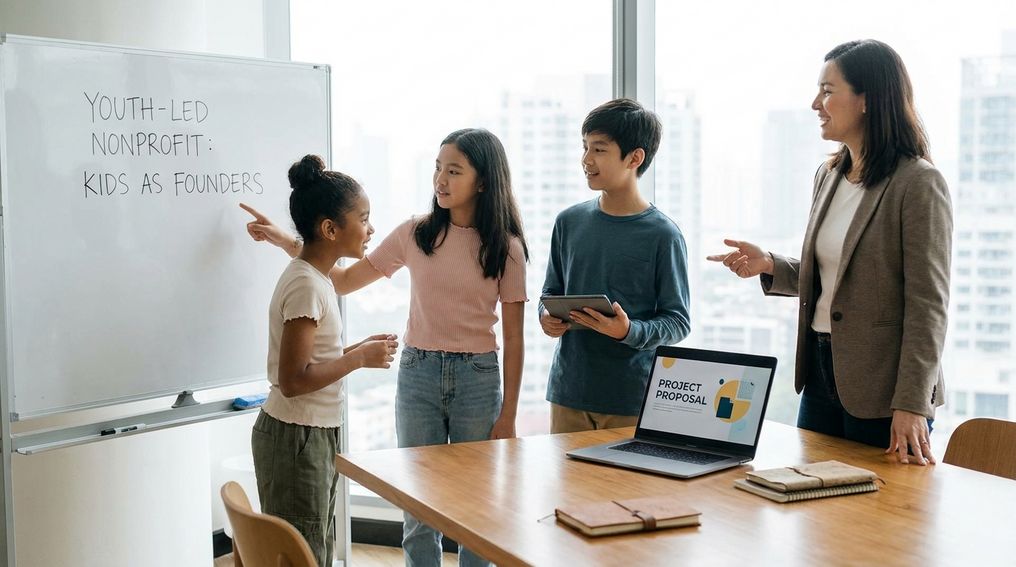
Kids can make better founders than adults expect because they often start with direct moral clarity, move before prestige gets in the way, and recruit peers through trust rather than status. A kid-run nonprofit works best when young people lead the mission and adults protect the legal, financial, and operational guardrails.
The story of Free the Children shows why age is a poor shortcut for judging founder potential. Founded by 12-year-old Craig Kielburger after he learned about murdered child labor activist Iqbal Masih, the organization became one of the earliest widely known child-founded global charities. The useful lesson isn’t that kids should run alone; it’s that adults should stop mistaking youth for lack of seriousness.
Who Was The 12-Year-Old Who Started A Global Movement?
Craig Kielburger was a Canadian student who founded Free the Children in 1995 at age 12 after reading about Iqbal Masih, a Pakistani child labor activist who had been killed. The founding idea was simple and hard to ignore: children should have a voice in fighting harms that affected other children.
That direct connection gave the early organization its force. Kielburger didn’t begin with a polished institution, donor database, or formal campaign office. He began with classmates, school conversations, and a cause that other young people could understand without translation. The early message traveled because it sounded less like branding and more like a child saying, “This should not be normal.”
Free the Children started in Thornhill, Ontario, and grew into an international youth empowerment and educational development organization. Later, the organization became associated with WE Charity and the WE Movement. Its later history is more complicated than the origin story, but the early years still matter for anyone trying to understand youth-led social change. They show how a child founder can turn attention into action before adult hesitation slows the work down.
Can A Kid Legally Start A Nonprofit?
A kid can help start and lead a nonprofit mission, but adults usually need to handle legal duties, contracts, filings, and fiduciary responsibilities. In many places, minors face limits on signing binding agreements or serving in formal voting roles.
This distinction matters. A kid-run nonprofit doesn’t mean a child handles every legal document, bank account, insurance policy, and compliance task alone. It means young people shape the purpose, voice, priorities, and community energy of the organization. Adult support should make the mission safer and more durable, not quietly replace youth leadership.
Governance is where many youth-led efforts either mature or lose their original character. A responsible structure can include adult board members, parent or teacher mentors, fiscal sponsorship, and clear decision rules. The young founder still needs meaningful authority over programs, storytelling, and peer engagement. If adults take every serious decision away, the project stops being youth-led and becomes adult-run with a child spokesperson.
Why Do Kids Think Differently From Adult Founders?
Kids often see problems before they learn the professional reasons people give for delay. Their advantage is not business experience; it’s speed of concern, moral directness, and the ability to mobilize peers without needing formal status.
Adults often begin by asking whether an idea is feasible, fundable, scalable, or reputationally safe. Those questions matter, but they can arrive too early. Young founders often begin with a sharper question: who is being hurt, and what can we do now? That instinct can cut through the fog that makes adults over-plan and under-act.
Peer networks are another hidden advantage. A child founder can walk into a classroom, speak in plain language, and invite classmates into a cause without sounding like a campaign consultant. Schools, clubs, families, faith groups, and youth service spaces can become early distribution channels. The early Free the Children story fits that pattern: start where you are, use the relationships already around you, then build outward.
What Lessons Come From Free The Children’s Early Years?
The first lesson is to start small enough that action can happen immediately. Free the Children began through a student’s response to a newspaper story, then grew through classmates and community support rather than waiting for perfect institutional readiness.
The second lesson is that moral clarity can be a founder asset. Adult founders often polish language until it becomes safe and forgettable. Young founders are more likely to say what they mean in words their peers can repeat. That makes early campaigns easier to understand, easier to share, and harder to dismiss as another abstract initiative.
The third lesson is persistence without pretending to know everything. A young founder doesn’t need to be the legal expert, accountant, fundraiser, and program designer on day one. The stronger move is to learn fast, ask for specific help, and keep the mission visible. Free the Children’s growth shows that a youth-led organization can begin with a small circle and still attract wider attention when the mission connects deeply with people.
Why Is Adult Support Different From Adult Control?
Adult support gives a young founder safety, structure, and access without taking away ownership. Adult control uses the child’s story for attention, then moves real decisions behind closed doors.
The difference shows up in daily choices. A supportive adult helps a young founder understand budgets, meeting notes, donor expectations, school balance, and legal limits. A controlling adult rewrites the mission, speaks for the founder, and treats youth leadership as a public image tool. The first builds capacity; the second weakens trust.
Good mentors ask better questions rather than grabbing the steering wheel. They help young founders compare options, understand risk, and prepare for meetings. They also protect time, since school, family life, and rest still matter. A young social entrepreneur should not have to prove seriousness through burnout.
What Happened After The Kid-Run Nonprofit Grew Up?
Free the Children later became tied to WE Charity and the WE Movement, expanding far beyond its student-led origin. Its later public controversy is a reminder that inspiring origin stories do not remove the need for strong governance, transparency, and accountability.
This point should be handled carefully. The early story can teach founder lessons without turning the full later history into a simple success myth. Organizations change as they grow, add programs, raise money, hire staff, and operate across borders. A child-founded charity still needs the same adult-level controls expected of any serious nonprofit.
The practical takeaway is not cynicism. It’s discipline. Youth-led organizations need clear records, honest reporting, conflict management, and boards that understand their responsibilities. The founder’s age may create attention, but structure is what keeps the mission from depending on attention alone.
Why Do Kid-Run Nonprofits Succeed When Adults Doubt Them?
Kid-run nonprofits can succeed because they often combine a personal cause, peer trust, and a simple call to action. Adults may doubt the operational side, but youth-led projects can build early momentum faster than expected when the mission is easy to understand.
The nonprofit sector is crowded, with a large number of tax-exempt organizations in the United States alone. That makes attention hard to earn. A young founder’s voice can stand out because it disrupts the usual pattern of institutional messaging. People listen because the source feels close to the issue, not polished at a distance.
Still, attention is not the same as durability. A youth-led organization needs repeatable systems once the first wave of interest arrives. That includes safe fundraising practices, age-appropriate roles, documented decisions, adult sign-off where required, and a plan for leadership transitions. The best youth-led work blends child-driven urgency with grown-up safeguards.
How Can Parents And Teachers Support A Young Founder Without Taking Over?
Parents and teachers can support a young founder by building guardrails, opening doors, and keeping the young person in the decision-making seat. The goal is to protect the child and the mission at the same time.
Start by asking what problem the young founder wants to solve, who is affected, and what action fits their age, time, and resources. Help them choose a manageable first project before creating a formal organization. A school supply drive, awareness event, peer education campaign, or partnership with an existing charity may teach more than rushing into incorporation. Small projects also reveal whether the founder has sustained interest after the first burst of emotion.
When the work grows, bring in adults with relevant skills. That may include a lawyer, accountant, school administrator, nonprofit mentor, or experienced community organizer. Define who makes which decisions in writing. The young founder should understand the limits, but they should also see that limits are tools for safety, not excuses to silence them.
What Are The Legal And Practical Questions Adults Should Ask?
Adults should ask whether the child can legally hold the role being discussed, who signs agreements, who handles money, and how the organization protects the young founder. These questions help a youth-led idea grow without creating avoidable risk.
The minimum age for nonprofit leadership depends on location and role. A minor may be able to serve in an advisory or ambassador role, but voting board service, officer duties, bank access, and contract authority may be restricted. Since rules vary, adults should check local nonprofit requirements before giving a young founder a formal title. Titles should match real authority, not just marketing value.
Practical questions matter just as much as legal ones. Who reviews donations? Who approves public statements? Who manages school absences, travel, media requests, and donor communication? Who steps in if the founder needs a break? A responsible plan keeps the young person from carrying adult pressure without adult protection.
What Can Kid-Run Nonprofits Teach Adults?
- They question assumptions adults accept.
- They act on empathy before logistics.
- They mobilize peers with trust.
- They treat obstacles as solvable.
What Founders Of Any Age Should Take From This Story
The lesson from a kid-run nonprofit is not that children have all the answers or that adults should step aside entirely. The lesson is that young people often notice moral urgency before adults package it into committees, plans, and delays. Free the Children’s early story shows the value of starting close to home, speaking plainly, and inviting peers into action before the idea looks polished. It also shows why youth-led work needs adult support that is practical, respectful, and legally sound. If you’re building something that matters, don’t measure founder potential only by age; measure clarity, commitment, teachability, and the ability to move people toward useful action.
References
- Britannica: Craig Kielburger Biography
- WE.org: Our Story
- National Center For Charitable Statistics: Nonprofit FAQs
- National Council Of Nonprofits: Board Responsibilities
- Junior Achievement
- Global Entrepreneurship Monitor
- Youth Service America.

Brook Church-Koegel is the founder and CEO of Alpha Capital Management, an asset management firm that invests as a co-GP alongside institutional investors, and the founder of Advisors Edge and the Insurance Education Institute. He lives in Southern California. Read Brook’s biography.